Why the Old Quarter Feels Like a Movie Set
Hanoi’s Old Quarter is only a few square kilometers, yet it packs in more life than some entire cities. The streets follow a centuries-old layout built around trade guilds. That is why you still see names like Hang Bac (silver) or Hang Gai (silk). Every block is a mix of scooters, food stalls, temples, cafés, and colonial-era buildings squeezed into an environment that feels more like a living market than a tidy tourism district.
That intensity is the reason people fall in love with it. It is also why the Old Quarter attracts the highest concentration of tourist-facing hustle in Vietnam. When everything feels fast, crowded, and unfamiliar, small overcharges are easy to slip past. The good news is that almost every scam here is low-tech and avoidable once you know the pattern.
Watch the Video First (It Shows the Vibe)
If you want the visual version, the video above walks through the Old Quarter and shows how quickly the street energy ramps up at night. Use it as a reference before you head into Beer Street or take a cyclo around Hoan Kiem Lake.
A Quick Primer on How the Old Quarter Works
Think of the Old Quarter as a maze of specialized streets wrapped around Hoan Kiem Lake. The area is walkable, but walking does not mean calm. Sidewalks often double as parking lots or extension seating for cafés. Scooters and delivery riders use any open space as a roadway. Crossing the street requires confidence and a steady pace, not sudden stops.
Most scams in the Old Quarter are built around momentum. A vendor starts talking before you have time to ask the price. A stranger offers to help or guide you. A friendly smile and constant motion makes it feel rude to pause. The best defense is simple: stop the momentum. Ask for a price before accepting a service, confirm it again, and walk away if anything feels vague.
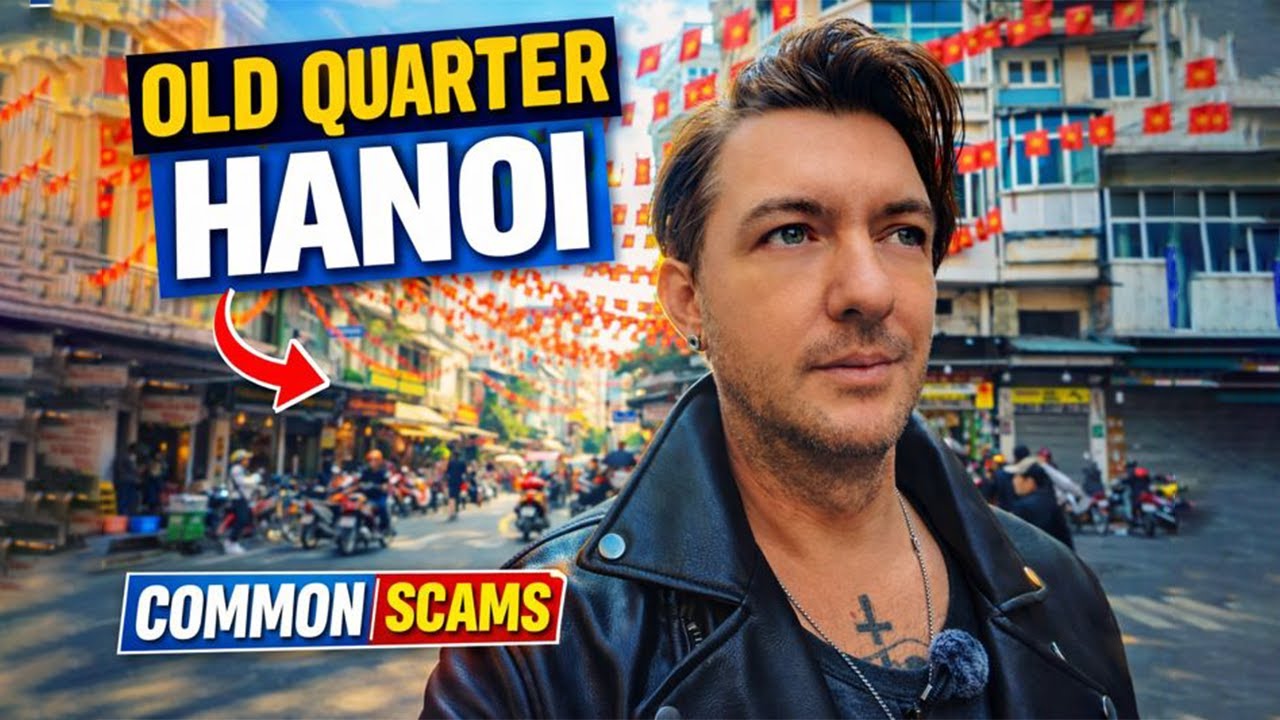
The Core Old Quarter Scams (and How They Work)
Most Old Quarter scams are not dangerous; they are opportunistic. The pattern is usually the same: a low-price offer shifts into a high-price demand after the service is completed. Here are the main ones to watch for and what to do instead.
- Overpriced cyclo rides: Cyclos are iconic and slow-moving, which makes them a tourist magnet. The scam happens when the driver says a low price for a short loop, then demands a higher rate per person, per hour, or for a “tip.” Always agree on a total price in Vietnamese dong before you sit down, confirm if it is per person, and have the exact cash ready. If the price feels too cheap to be real, it probably is.
- Shoe cleaning or repair hustle: Someone points at your shoes, gestures that they are dirty, and starts cleaning without clear permission. Then they ask for a high payment or insist on extra repairs. The simplest response is a firm “No thanks” and keep moving. If you actually want a clean, ask for the price upfront and pay only what you agreed.
- Beer Street price swaps: On Ta Hien (Beer Street), menus can change or drinks can be brought at a different price from what you saw. Keep the menu, take a quick photo if needed, and confirm prices before ordering. If you are in a group, nominate one person to handle the order and bill to avoid confusion.
- Taxi meter tricks: While Grab and other ride-hailing apps reduce scams, unmarked taxis sometimes use tampered meters or take scenic routes. Use Grab, Be, or Gojek instead of street hails, and always check the license plate in the app before getting in.
- Photo fee surprise: Some vendors offer to place a basket on your shoulder or pose with a street setup, then demand a fee for the photo. If you want the shot, ask the price first. If not, a polite wave and step back avoids the awkwardness.
- Friendly guide detours: Someone offers to show you a temple or a shortcut, then leads you to a shop with inflated prices. Unless it is a licensed tour you booked, decline and stick to your plan. The Old Quarter is dense; you do not need a guide to find food or a lake walk.
Common Scams Across Vietnam (Not Just Hanoi)
The Old Quarter gets the attention, but the broader Vietnam scam list is consistent from Hanoi to Ho Chi Minh City, Hoi An, and Nha Trang. The tricks do not change much; only the setting does. Knowing the wider patterns helps you relax on the rest of your trip.
Motorbike Rental Extras
Some rental shops advertise a low daily rate and then add fees for helmets, scratches, or “late return.” Take photos of the bike from every angle, confirm the return time, and keep a copy of your agreement. If a shop refuses to document the bike’s condition, choose a different one.
Overpriced Taxi to Airport
Airport transfers are a classic target for inflated prices, especially if you look like you just landed. Use ride-hailing apps or pre-book a hotel transfer with a clear price in writing. If you do take a taxi, insist on the meter and follow the route on your map app.
Menu Switches and Service Fees
A menu shows one price, but the bill shows another with extra charges. This happens in tourist-heavy areas. Ask if service charge or taxes are included before ordering. Keep the menu close and do not be afraid to request a correction before paying.
Currency Confusion
Vietnam has large denominations, and it is easy to mix up a 20,000 note with a 200,000 note. Count your cash, keep smaller notes accessible, and pay slowly. If a vendor says you gave them the wrong amount, stay calm and recount together.
Fake Police Shakedowns
Rare but reported: someone in a uniform requests a fine or ID check and suggests paying cash. If this happens, ask to go to the station and call your hotel. Real officials do not demand on-the-spot cash from tourists.
Street Drugs on Beer Street
On Beer Street, you may be offered balloons or pills. It is illegal and risky. Decline immediately and keep walking. Police sometimes crack down in waves, and foreigners are easy targets for fines or worse. Avoid the situation altogether.
How to Move Through the Old Quarter Without Stress
The most effective scam prevention is not confrontation; it is quiet confidence. Walk at a steady pace, make decisions quickly, and keep your body language neutral. If someone tries to engage you with a service you did not ask for, a smile and “No thanks” is enough. The moment you stop to debate the price, you have already handed over control of the interaction.
That said, you can still be friendly. Vietnam is warm and hospitable, and the majority of people you meet are just trying to make a living, not scam you. The trick is to separate hospitality from sales. If someone is offering a service, treat it like a business interaction: confirm the price, confirm what is included, and pay what you agreed to.
Practical Tips That Actually Work
- Use Grab or Be for transport. The price is locked in, and the driver details are logged.
- Carry small notes. It avoids the “no change” trick and makes quick payments easier.
- Ask “How much total?” instead of “How much?” to avoid per-person surprises.
- Pay after you see the bill, not before. If someone wants money up front, walk away.
- Use Google Translate or a price calculator app if a negotiation feels stuck.
- Screenshot menus or storefront signs if you are unsure about pricing.
The Old Quarter Is Still Worth It
It is easy to let scam warnings turn into paranoia. Do not let that happen. The Old Quarter is one of the most photogenic, delicious, and energetic neighborhoods in Southeast Asia. If you learn a few basics, you can enjoy it without stress. Start your mornings with a slow walk around Hoan Kiem Lake, grab a coffee on a quiet side street, and save Beer Street for a short, controlled visit if you want the nightlife.
The key is to treat the Old Quarter like a real city, not a theme park. When you order food, order with confidence. When you cross the road, commit to your path. When someone offers a service you did not ask for, say no without guilt. You do not need to be rude; you just need to be clear.
A Quick Walkthrough Itinerary (Scam-Safe)
If you want a simple route that avoids the worst pressure points, start at sunrise around Hoan Kiem Lake. Head north along Hang Be and Hang Bac when shops are opening. Grab breakfast at a small pho or bun cha spot where locals are eating. Midday, duck into a café on a quieter street such as Bao Khanh. In the late afternoon, walk west toward St. Joseph’s Cathedral for golden light and fewer crowds.
At night, if you want to see Beer Street, go early, walk one lap, and leave when it gets crowded. That is when the price games and aggressive offers start. You can still enjoy the energy without staying long enough for it to become annoying.
Final Thoughts: Respect the Hustle, Protect Your Trip
Vietnam is one of the most rewarding countries to travel through. The food is extraordinary, the people are resilient and curious, and the landscape shifts from misty mountains to tropical beaches in a few hours. The scams are not unique to Vietnam; they are the byproduct of dense tourism and low daily wages. Your job as a traveler is not to become suspicious of everyone. Your job is simply to move through the space with clarity.
If you do get overcharged, treat it as an expensive lesson and move on. The worst thing you can do is let one small moment ruin your entire perception of the country. Keep your standards, keep your calm, and enjoy the Old Quarter for what it is: a crowded, unforgettable slice of Hanoi that still feels alive even after midnight.
Comments & Questions
If you have questions about the Old Quarter or want to share a scam story so others can learn from it, leave a comment below. I read every message and reply when I can.