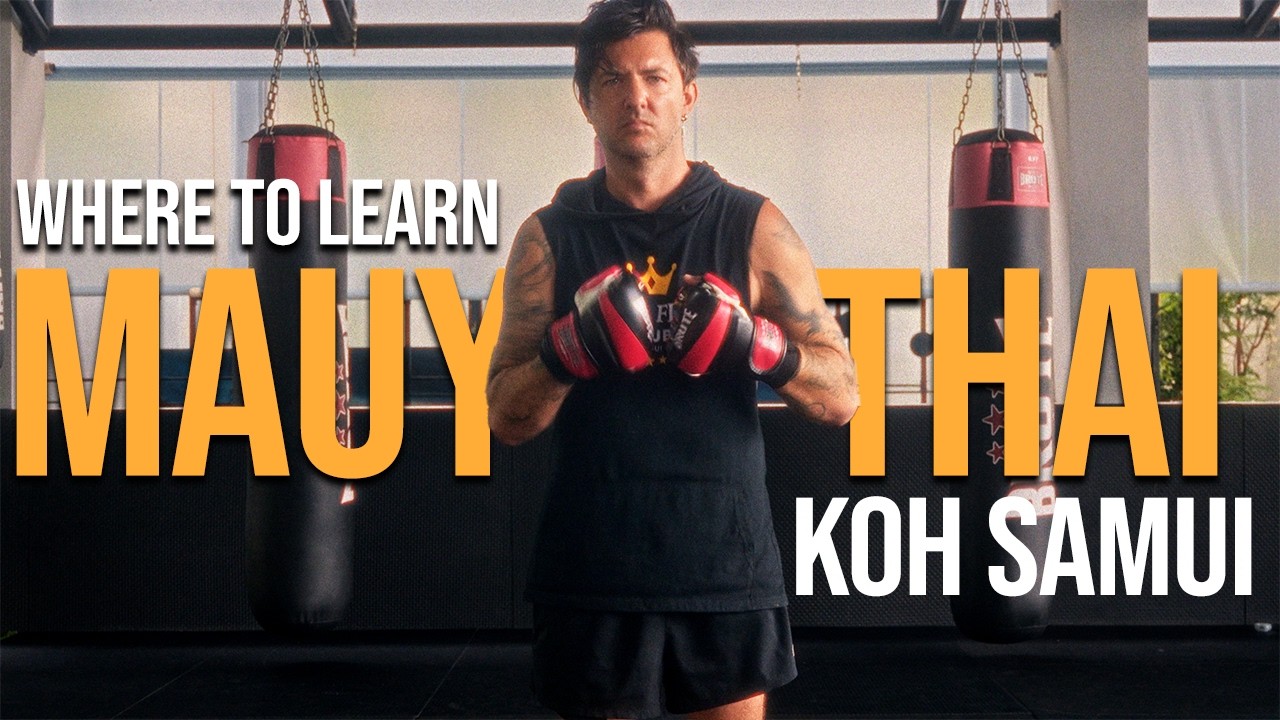
I didn’t go to Thailand to become a fighter. I went because I was curious. At 39, with no background in Muay Thai or any real martial arts, I wanted to see what it would actually feel like to step into that world. Not for a day, not as a tourist experience, but properly. To live it, even if just for a short period of time.
I ended up spending six weeks training in Koh Samui, and by the end of it, I had a much clearer understanding of what this kind of experience really involves.
Why Koh Samui?
Koh Samui sits in an unusual middle ground. On one hand, it’s a tropical island with beaches, cheap food, and a relaxed pace of life. On the other, it’s home to serious training environments where people come specifically to push themselves physically.
That contrast is what makes it work. You’re not isolated in a hardcore fight camp, but you’re also not just on holiday. You’re somewhere in between, and that balance helps people stay consistent.
Getting There and Settling In
Getting to Koh Samui is straightforward. You can fly directly to the island, or connect through Bangkok. Once you land, most gyms and accommodation are around a 10 to 15 minute drive from the airport.
From there, life gets simple quickly. Most people stay close to their gym, and some stay at the camp itself. Either way, your day starts to revolve around training.
Walking Into Training for the First Time
The first session is the hardest mentally. You walk in and everything is already moving. Pads are cracking, trainers are bouncing between students, and there’s no long introduction.
If you arrive with no experience, it can feel overwhelming for about ten minutes. Then it settles. A lot of people are in the same position: beginners, travelers, and people starting from zero.
The Daily Routine
Most people train twice per day: once in the morning and once in the afternoon. In between, you recover, eat, hydrate, and try to keep your energy up.
Sessions are repetitive by design: skipping, pad work, bag work, conditioning, and small technical adjustments. It’s simple in theory, but difficult in practice because consistency is the hard part.
After a few days, fatigue sets in. Your legs are heavy, your hands are sore, and your body feels constantly used. But over time, you stop negotiating with yourself and just show up.
The Environment, Trainers, and Recovery
The mix of people is one of the best parts. You’ll see people in their early 20s and people in their 40s, complete beginners and active fighters, all sharing the same training floor.
Good trainers make a huge difference. They correct details constantly, push your output, and scale expectations to your level. You’re not expected to be sharp immediately. You’re expected to keep turning up.
Outside the gym, life gets very minimal: eat, rest, train, repeat. Food is easy to find, gyms are close to accommodation, and that low-friction routine makes consistency possible.
How Long You Actually Need
A day or two gives you a taste, not a real understanding. After a few days, you understand the structure. After a couple of weeks, your body starts adapting and your confidence improves.
If you want meaningful progress, plan at least two weeks. Longer stays make the biggest difference physically and mentally.
The Fighting Side
If you want to go further, that path is there. Some people train specifically to fight, and you’ll see that progression around you. Watching local stadium fights, especially when someone from your gym is on the card, gives context to every drill you’re doing.
Final Thoughts
The biggest takeaway isn’t perfect technique. It’s consistency. Showing up when you’re tired. Showing up when you’re sore. Showing up anyway.
At 39, starting from zero, Muay Thai training in Thailand was manageable. Not easy, but manageable. If you’re considering it, you don’t need to be in peak shape before you arrive. You just need to commit to the routine once you do.
Watch the Experience